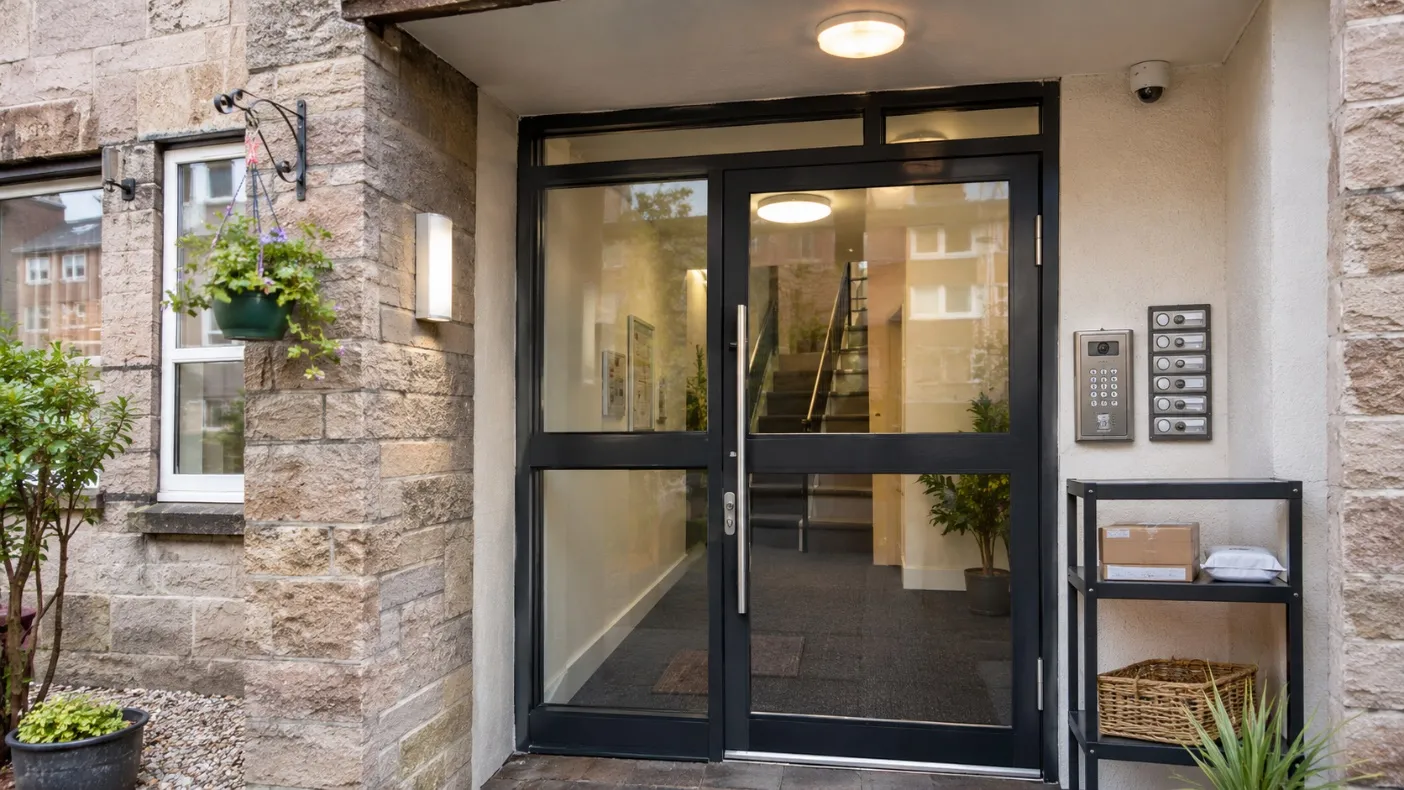
A shared entrance is more than the front door of a block of flats. Residents use it at different hours, visitors ring unfamiliar bells, delivery drivers arrive throughout the day, and parcels sometimes wait in communal areas. Security decisions become complicated when several households rely on the same space but have different expectations about access and privacy. Rather than covering every corner with cameras, residents and building managers need practical arrangements that make entry predictable, protect shared property and avoid turning ordinary movement into a source of suspicion.
Begin With the Everyday Flow of People
Observe how the entrance operates during a normal week. Is the external door often propped open while deliveries are carried upstairs? Can visitors identify the correct flat without wandering into private corridors? Does the entry system work for residents returning late at night? These details can reveal weaknesses that are not obvious from a quick equipment survey.
The first improvements may be simple: a properly closing door, readable flat numbers and clear delivery instructions. Electronic measures work best when basic access arrangements are already dependable.
Make Access Rules Fair and Understandable
A shared building needs a sensible process for issuing and withdrawing keys, fobs or entry codes. Residents should know whom to contact when a device is lost, and managing agents should avoid leaving former occupants with active credentials. Contractors may require temporary access, but that should not become a reason to circulate permanent codes widely.
When discussing Security alarm installation, clarify what the alarm is intended to protect. An alarm suitable for a locked communal storeroom may be inappropriate for a constantly used entrance hallway. Detection zones, operating hours and permitted movement should reflect how the building functions, not simply the available product features.
Treat Parcel Areas as a Design Problem
Missing deliveries often prompt requests for more cameras, but poor parcel arrangements can be an underlying issue. Packages left beside an unlocked doorway are exposed to passing visitors, weather and confusion over ownership. Where space allows, a designated delivery location or secure parcel storage may reduce opportunities for loss.
Any arrangement should remain accessible and must not block escape routes. Fire safety takes priority over convenience, and managers should check applicable building requirements before placing cupboards or storage units in communal corridors.
Use CCTV Without Monitoring Everyone Excessively
Cameras aimed at a shared entrance may help establish what happened during an incident. However, residents and visitors also have privacy interests. Decisions about camera positioning, notices, recording retention and access to footage require careful consideration, including applicable UK data-protection rules.
The building should have a clear reason for each camera. A view of the main doorway may be easier to justify than continuous recording of residents’ individual flat doors. Footage should be accessible only to authorised people, and cameras should not become a way to monitor neighbours’ everyday habits.
What to Check When Footage Is Missing
Imagine a parcel disappears, but the building’s recorder has not saved footage for several days. A visible camera and a working live view do not prove that recordings are being stored. Before accusing anyone or replacing equipment, a manager should establish the technical facts.
A search for CCTV camera repair near me may be appropriate when playback fails, cameras repeatedly disconnect or an individual device shows persistent faults. The person arranging an inspection should document symptoms, relevant times and which cameras are affected. That gives the technician useful evidence while avoiding unnecessary access to unrelated recordings.
Put Responsibility in Writing
Even well-chosen equipment becomes ineffective if nobody owns the maintenance process. The building’s management arrangements should identify who approves repairs, who updates access permissions and who responds to reported faults. Residents need one understandable route for raising concerns, rather than several informal group chats with conflicting instructions.
Review arrangements after changes in occupancy, building works or repeated delivery problems. A short written policy can prevent disagreements about what the security equipment is supposed to achieve.
Conclusion
The best shared entrance is not the one with the most devices; it is the one residents can use confidently without sacrificing privacy. Reliable doors, sensible parcel arrangements, proportionate monitoring and clear maintenance responsibilities each solve a different problem. If repairs or new equipment are needed, techtwins.co.uk describes security installation and technical services relevant to properties in Scotland. Decisions should ultimately be made collectively, with the building’s layout and daily routines in mind, so that protection remains practical for everyone who lives there.