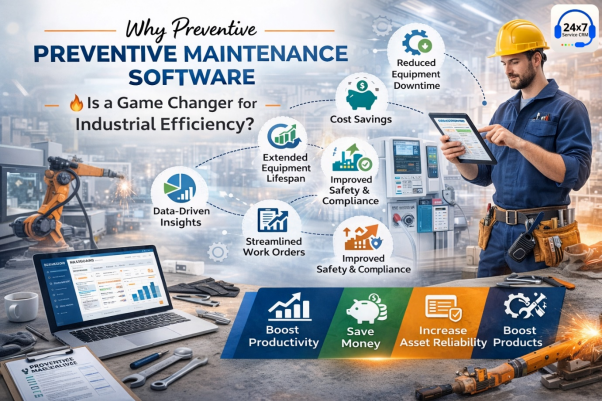
In modern industries, efficiency, reliability, and productivity are critical for maintaining a competitive edge. Manufacturing plants, energy companies, logistics operations, and service-based industries all rely heavily on machines, equipment, and infrastructure to keep their operations running smoothly. However, unexpected equipment failures, downtime, and costly repairs can significantly disrupt productivity and increase operational costs.
This is where Preventive Maintenance Software Service CRM becomes a powerful solution. By helping organizations schedule maintenance tasks, monitor equipment performance, and prevent unexpected failures, preventive maintenance software has become a game changer for improving industrial efficiency. Businesses that implement this technology can reduce downtime, extend equipment lifespan, and improve overall operational performance.
Understanding Preventive Maintenance Software
Preventive Maintenance Scheduling Software is a digital tool designed to help organizations manage routine equipment maintenance before problems occur. Instead of waiting for machines to break down, businesses can schedule inspections, servicing, and part replacements in advance.
Traditionally, many industries relied on reactive maintenance—fixing equipment only after it failed. This approach often leads to sudden production halts, expensive emergency repairs, and safety risks.
Preventive Maintenance Software replaces reactive strategies with proactive maintenance planning. It allows maintenance teams to track assets, automate maintenance schedules, and receive alerts when equipment requires servicing. By taking a proactive approach, organizations can ensure that machinery operates efficiently and reliably.
Reducing Unexpected Downtime
One of the most significant advantages of preventive maintenance software is its ability to minimize unexpected equipment downtime. Equipment failures can disrupt production lines, delay deliveries, and negatively impact customer satisfaction.
With preventive maintenance systems, organizations can monitor equipment health and schedule regular inspections. The software sends reminders and notifications to technicians when maintenance tasks are due. This ensures that potential issues are identified and resolved before they lead to major failures.
As a result, businesses experience fewer disruptions and maintain consistent productivity levels.
Extending Equipment Lifespan
Industrial equipment represents a major investment for organizations. Machines, manufacturing systems, and heavy equipment require proper care and maintenance to perform efficiently over the long term.
Preventive maintenance software helps businesses extend the lifespan of their equipment by ensuring that maintenance activities are performed regularly. Routine servicing, lubrication, calibration, and part replacements prevent excessive wear and tear.
By keeping equipment in optimal condition, companies can avoid premature replacements and maximize the value of their assets.
Improving Maintenance Planning and Scheduling
Maintenance planning can be a complex task, especially in large industrial facilities that manage hundreds or thousands of machines. Without an organized system, maintenance teams may struggle to track maintenance schedules and equipment histories.
Preventive Maintenance Software simplifies maintenance planning by providing a centralized platform where all equipment information is stored. Maintenance managers can create maintenance schedules, assign tasks to technicians, and track progress in real time.
This organized approach ensures that maintenance tasks are completed on time and reduces the risk of missed servicing schedules.
Enhancing Workforce Productivity
Maintenance technicians often spend valuable time searching for equipment records, checking maintenance logs, or coordinating tasks manually. Preventive maintenance software eliminates these inefficiencies by digitizing maintenance workflows.
Technicians can access equipment data, maintenance instructions, and service histories directly from mobile devices or computers. They can also update maintenance reports, record completed tasks, and upload photos or notes instantly.
This streamlined workflow allows technicians to focus on maintenance activities instead of administrative work, improving overall workforce productivity.
Reducing Maintenance Costs
Reactive maintenance strategies often lead to high repair costs, emergency maintenance expenses, and unplanned downtime. Preventive maintenance software helps businesses reduce these costs by identifying potential problems early.
Regular inspections and scheduled maintenance prevent minor issues from turning into major equipment failures. Additionally, organizations can plan maintenance activities during non-production hours, reducing the financial impact of downtime.
By managing maintenance proactively, businesses can significantly lower operational costs and improve profitability.
Data-Driven Maintenance Decisions
Modern preventive maintenance software provides advanced analytics and reporting capabilities that help organizations make informed decisions. Businesses can analyze equipment performance, maintenance frequency, repair history, and downtime trends.
These insights allow maintenance managers to identify patterns and optimize maintenance strategies. For example, if a particular machine frequently requires repairs, managers can investigate the root cause and implement corrective measures.
Data-driven decision-making helps organizations continuously improve their maintenance processes and achieve higher efficiency.
Improving Safety and Compliance
Industrial environments often involve heavy machinery, complex systems, and potentially hazardous operations. Equipment failures can lead to accidents, injuries, and safety risks for workers.
Preventive maintenance software helps organizations maintain safer workplaces by ensuring that equipment is regularly inspected and maintained according to safety standards. Maintenance records are stored digitally, making it easier to track compliance with industry regulations.
By maintaining accurate documentation and performing routine safety checks, companies can reduce workplace risks and meet regulatory requirements.
Better Asset Management
Industrial facilities often manage a wide range of assets, including machines, tools, vehicles, and infrastructure. Preventive maintenance software provides a centralized system for tracking all assets and their maintenance history.
Each asset can have detailed records that include purchase information, service history, maintenance schedules, and performance metrics. This visibility allows businesses to monitor asset health and plan maintenance activities more effectively.
Better asset management helps organizations optimize equipment utilization and ensure that all resources are used efficiently.
Integration with Modern Technologies
Preventive maintenance software is becoming even more powerful with the integration of modern technologies such as Artificial Intelligence (AI), Internet of Things (IoT), and predictive analytics.
IoT sensors can monitor equipment conditions such as temperature, vibration, and pressure in real time. This data can be analyzed by AI-powered systems to detect early warning signs of equipment failure.
Predictive maintenance takes preventive strategies to the next level by forecasting when maintenance will be required based on actual equipment performance data. These innovations allow businesses to reduce downtime even further and optimize maintenance planning.
Scalability for Growing Industries
As industrial operations expand, managing maintenance manually becomes increasingly challenging. Preventive Maintenance Scheduling Software offers scalable solutions that can support growing businesses and complex operations.
Whether a company operates a single manufacturing plant or multiple facilities across different locations, the software can manage maintenance activities across all assets. Cloud-based platforms also allow managers to access maintenance data from anywhere, improving coordination between teams.
This scalability makes preventive maintenance software a valuable tool for organizations of all sizes.
Conclusion
Preventive Maintenance Software Service CRM has become an essential tool for modern industries seeking to improve efficiency, reduce downtime, and extend equipment lifespan. By shifting from reactive maintenance to proactive maintenance strategies, businesses can prevent costly equipment failures and maintain consistent operational performance.
The ability to automate maintenance scheduling, track equipment performance, analyze data, and improve workforce productivity makes preventive maintenance software a powerful solution for industrial operations.
As industries continue to adopt digital technologies and automation, preventive maintenance systems will play an increasingly important role in ensuring reliable operations and long-term business success. Organizations that embrace this technology today will be better equipped to achieve higher efficiency, lower costs, and sustainable growth in the future.